Flora and Fauna at Rajaji National Park

There is no doubt that Rajaji National Park is a treasure trove of natural assets like flowers, plants, trees, birds, animals, insects and exotic ecosystems that would not be able to thrive anywhere else in the country.
Flora: The Shivalik ranges are characterized by a unique ecosystem of Sal trees and bamboo forests that cover the entire area with subtropical and tropical plants and trees. Coniferous trees, deciduous forests, pine trees, grasslands and riverine vegetation can be found in the National Park.
The unique climatic conditions, as well as the presence of the mountains, rivers and plains, has allowed the flora in the area to thrive and multiply. Some of the more recognizable flowering trees include Acacia, Kydia, Bel, Pipal, Adina, Amaldas, Lantana, Chilla, Kachnar, Ber, Shorea, etc.
Fauna: The presence of animals and birds in large numbers is one of the most distinctive features of Rajaji National Park. The conjoining of three National Parks has added to the repertoire of animals who have made this area their home, making a safe place for them to thrive and grow in their natural habitat.
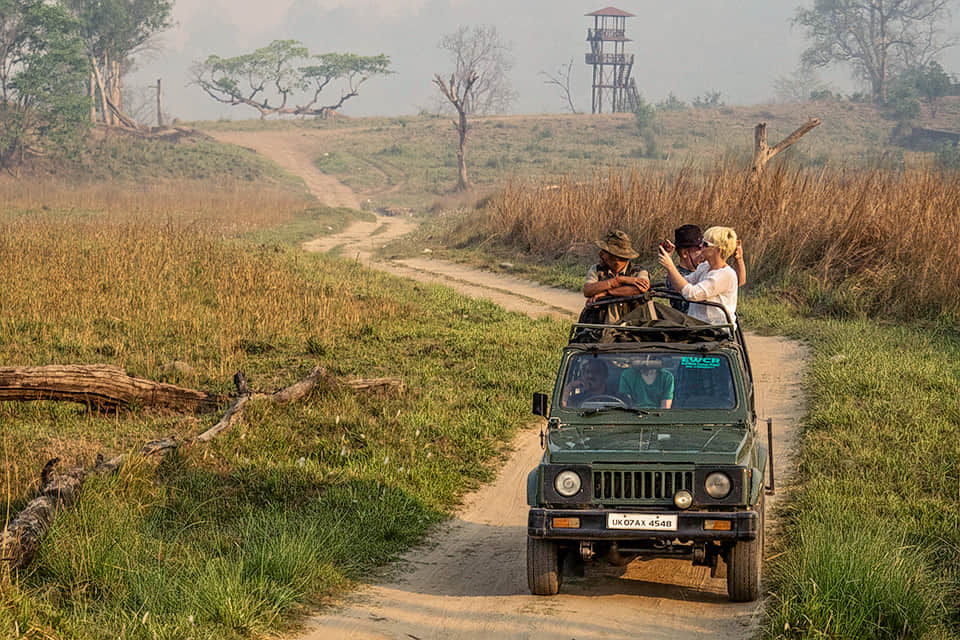
Being an official tiger reserve, it is home to many tigers that one can see when on a jeep safari. Apart from tigers, it is also home to the Asian Elephant, Striped hyena, langurs, barking deer, sloth bears, jungle cats, leopards, bears, porcupines, jackals and the yellow-throated marten.
It is also a popular place for bird-watching due to the abundance of birds such as woodpeckers, barbets, fire-tailed sunbird, pheasants, great-pied hornbills, starlings, cuckoos, partridges, vultures, barbets and much more.
Wildlife in Rajaji National Park
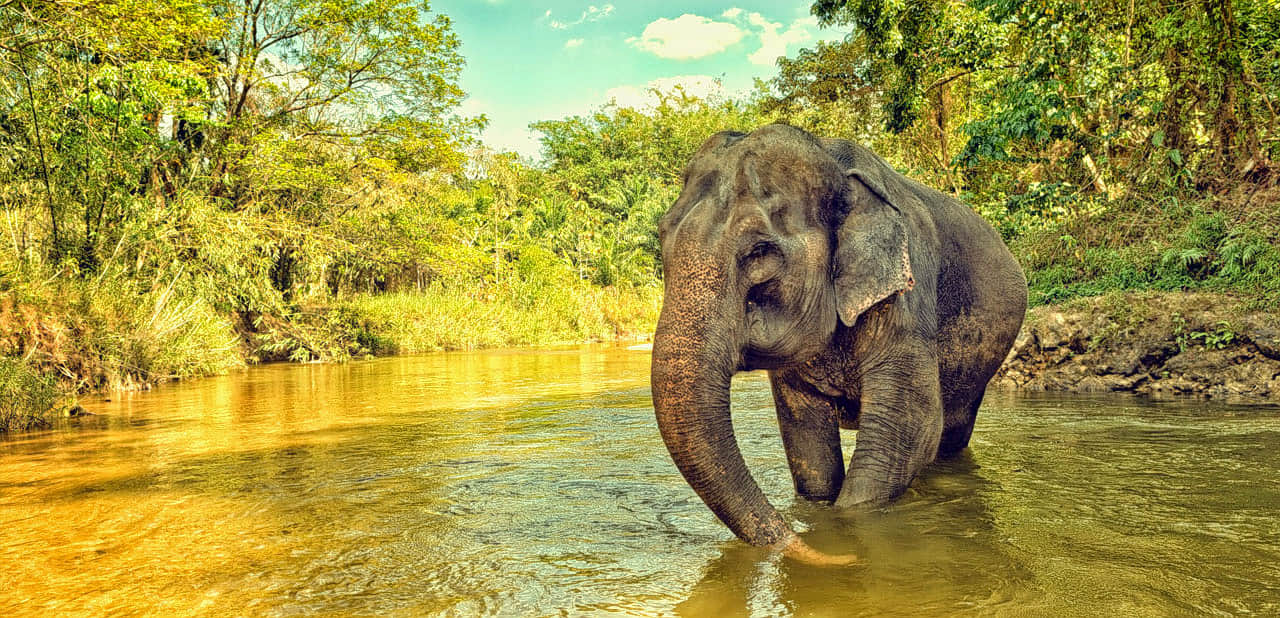
The endless expanse of green jungles in Rajaji National Park is the perfect place for large herds of animals to thrive and survive in their natural environment. The most famous and frequently spotted animal at the National Park is the Asian Elephants who roam freely and often in herds.
In fact, elephant safari is one of the most popular safaris in the park. In 2015, the park was officially declared a tiger reserve because of its impressive and increasingly growing tiger population. It is also known for gorals and mountain goats, which are found in abundance.
Apart from the elephants, tigers and mountain goats, several animals can be found in large numbers at the park such as:
-Rhesus macaque
-Sloth bears
-Hog deer
-Leopards
-Chital
-Sambar
-Striped hyena
-King cobras
-Porcupines
-Himalayan black bears
-Goral
-Indian hare
-Wild boar
Rajaji National Park is also known for its expansive bird population which makes it a much-frequented place by bird-watchers. There are over 315 species of bird with even more species migrating to the region from all parts of the world.
The most distinctive birds that you may be able to spot when you are here include the peafowl, pheasants, vultures, barbets, kingfishers, woodpeckers, great pied hornbills, fire tailed sunbird and a great many numbers of migratory birds who frequent the area during the winter season.
Restaurants and local food in Rajaji National Park

The National Park itself does not have many food options in terms of restaurants or cafes. The area is also spread over quite a large piece which means navigating through the National Park will take time.
The best option is to carry your own supply of food from home or restaurants outside when you are planning to visit the National Park. That being said, there are several restaurants around the area where you can find a sufficient offering of local cuisine as well as comfort food to keep you satiated during your journey. Here are some of the most suitable dining options around the park.
1. Next 2 - Next 2 is a fine dining restaurant that is located 0.9 km away from the National Park. You can find a wide array of India, Chinese and Continental food. The restaurant is well-decorated and accessible easily by road.
2. Ganga Lahari Restaurant - If you are in the mood to enjoy a meal with a view, you must pay a visit to the Ganga Lahari restaurant, located on the banks of the Ganges in Haridwar. It has vegan, vegetarian and other convenient options. It serves up an impressive range of Indian and Asian food.
3. Chotiwala - Located 9 km from Rajaji National Park, this restaurant is the perfect place to travel to with your friends and family if you are searching for a comforting, home-cooked meal. All the food is prepared fresh and served in clean utensils with flavours that will remind you of home.
Rules and regulations of the Rajaji National Park

There are a few basic rules visitors must be aware of when they are travelling to Rajaji National Park. They are as follows:
1. The Park authorities will not take responsibility for any personal damage and visitors are to enter the park at their own risk.
2. No firearms or weapons are permitted within the park premises.
3. Mundal and Khara Chauki are the only two designated points in the park where visitors are allowed to get down from the vehicle.
4. Entry permits can be bought from the entry gates. However, if you are travelling for a night stop then you must speak to the director.
5. You are only allowed to dispose-off biodegradable litter inside the park in designated bins.
6. Playing loud music, feeding the animals, chasing and teasing the animals is strictly prohibited.
7. Visitors can park their vehicles in the designated parking spots.
8. The entry permits are valid for a single day’s use and are strictly non-transferable.
9. The director of the park reserves the right to entry for any individuals.