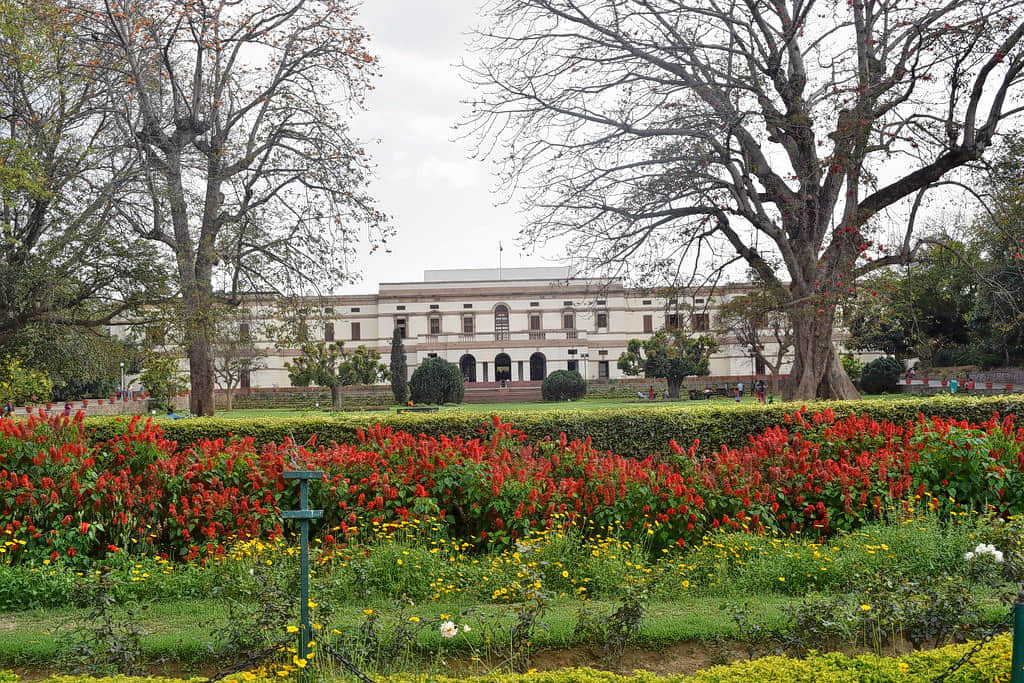
Location: The Park is located in the Prime-spot of Delhi. The complete address is Vandemataram Marg, New Delhi, Delhi – 110021
Timing: The Buddha Jayanti Park is opened from 5.00 AM to 7.00 PM
Price: There is no entry fee to come in the Park
Tips for Visiting Teen Murti Bhavan
1. If you plan to visit in the winter, then ensure you have multiple layers of clothing because Delhi’s winters can be brutal.2. Delhi Traffic is pretty infamous so we recommend you to leave earlier than usual if you want to make the best out of here.
3. The planetarium is unmissable and provides as one of the best experiences here.
4. Photography inside the library is strictly prohibited and silence is appreciated there.
5. Be sure to click many pictures of the premise for its sheer beauty and elegance.
About Nehru Memorial Museum
The Museum is a dedication to the architect of Modern India; Pandit Jawaharlal Nehru who crafted the future of India. The museum houses a diverse collection of the personal belongings of Nehru. You will also find on display manuscripts, letters and articles related to the life of Nehru and of the Independence era. There is a remarkable gift gallery that has many memorable gifts on display which he received in his career and life. The study, living room and bedroom have been preserved as it is with a host of audio and visuals available to help us get a glimpse into his life.
The Museum also talks about Nehru's personal and professional victories and his commends his status as a notified statesman. On the front lawn, there is a huge rock with inscriptions of his path-breaking speech delivered in the Assembly in 1947. On the walls of the museum also is an interconnected exhibition which takes us back to the Indian struggle for independence, to the times when Nehru lived here.
There is also a souvenir place in the complex which helps you pick your favorite memento reminding you of your wonderful visit here. There is also a monument named ‘Kushak Mahal’ that was once a hunting lodge but now a favorite spot for visitors.
About Nehru Memorial Library
Consisting of a rich repertoire of books, journals, and newspapers, the Nehru Memorial Library is a treasure trove of literature and research papers. The library boasts of more than 267,000 printed titles and about 200,000 photographs of the freedom struggle movement. There is also a specialized collection called 'Nehruana' which is a collector's item containing writings and memoirs of Nehru about his life and his thoughts as the leader of the nation. Like Nehruana there is also a collection containing stories about Mahatma Gandhi called ‘Gandhiana’ and ‘Indirana’ for Indira Gandhi.
For those who are interested in researching the colonial and post-colonial era, then you will not find a better place to rest your curiosity. The Library is also open to legitimate researchers looking for rare books to enrich their report at a very nominal fee. The library has one of the most enviable collections of titles which are difficult to find elsewhere.
There are close to 500 journals and periodicals in a separate section in Hindi and other regional languages. The must-visit Photo division at the library is stocked with a huge collection of photographs taking us into a journey of pre and post-independence era. Spending time here especially for avid readers will be bliss and the aura surrounding the place also is hard to miss.
About Nehru Planetarium
Nehru was passionate about Astronomy which was why he set ahead with the task of building a Planetarium where people would love to come and explore the universal wonders. The sky theatre in the Planetarium is quite popular which is a dome-shaped avenue highlighting information on planets, constellations, and stars. With the help of illustrations. Animated clips, paintings, and special effects, the audiences are always spellbound by the sheer magnanimity of the presentation. More than 2 Lakh visitors come here every year and want to visit the spot again because of its aura and stupendous display.
Also one of the major attractions is the Soyuz T-10 which was used by the first cosmonaut Rakesh Sharma. His journey is well depicted in his bodysuit and mission journal with the finest details of his expedition. The “Definiti optical star projector “Megastar” in the planetarium is something you can look forward to for it gives you the vision of 2 million stars at the same time.
During eclipses, the planetarium is full of activities because it prepares for the safe viewing of the eclipse. It arranges for sufficient telescopes, solar filters, and projectors that will give the visitor a peek into the beauty of the eclipse.
For a better scientific understanding of the nuances of the world that is bigger than where we live, the planetarium is unmissable.