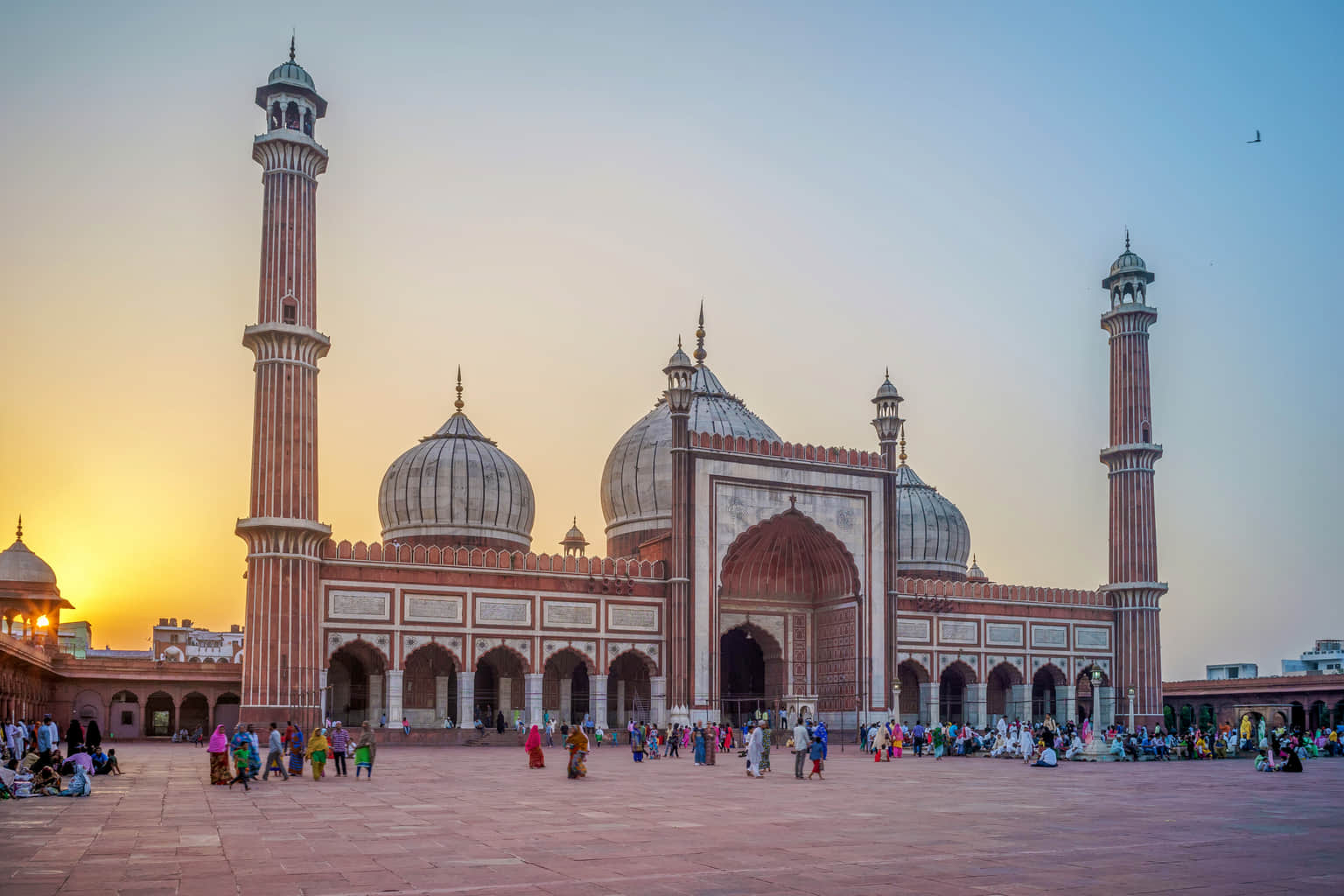
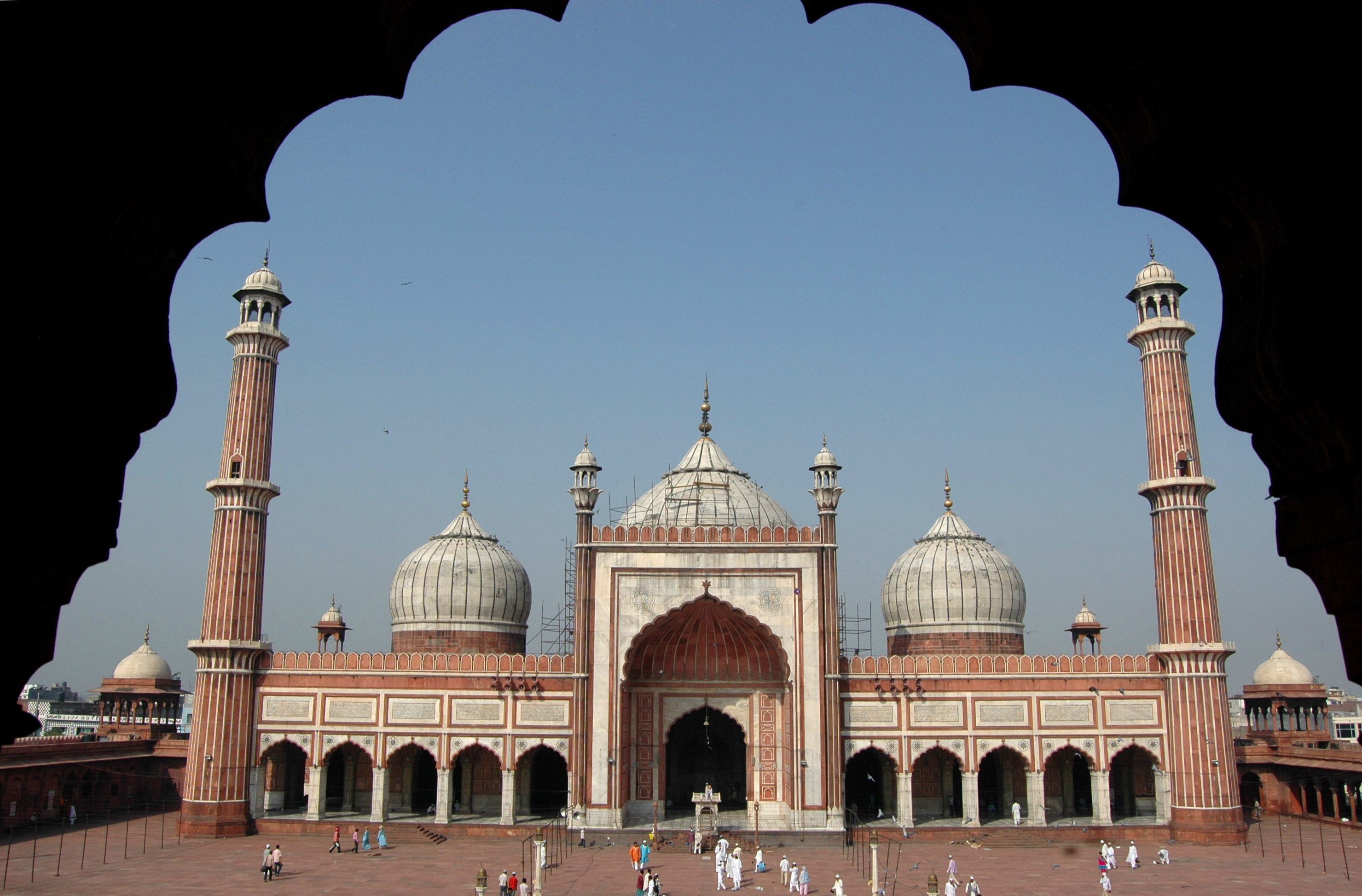
Jama Masjid, an iconic structure of the Islamic architecture was built by Shah Jahan, a prominent Mughal emperor in the capital city of Delhi. This mosque is one of the most visited tourist attractions of Delhi.
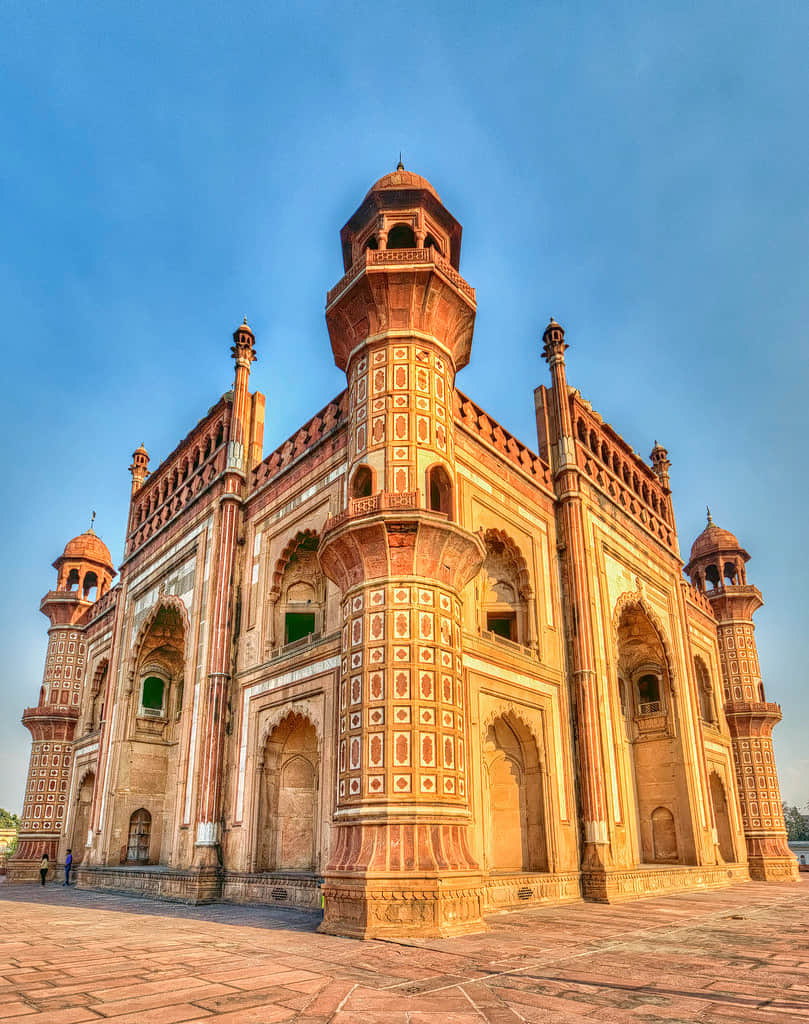
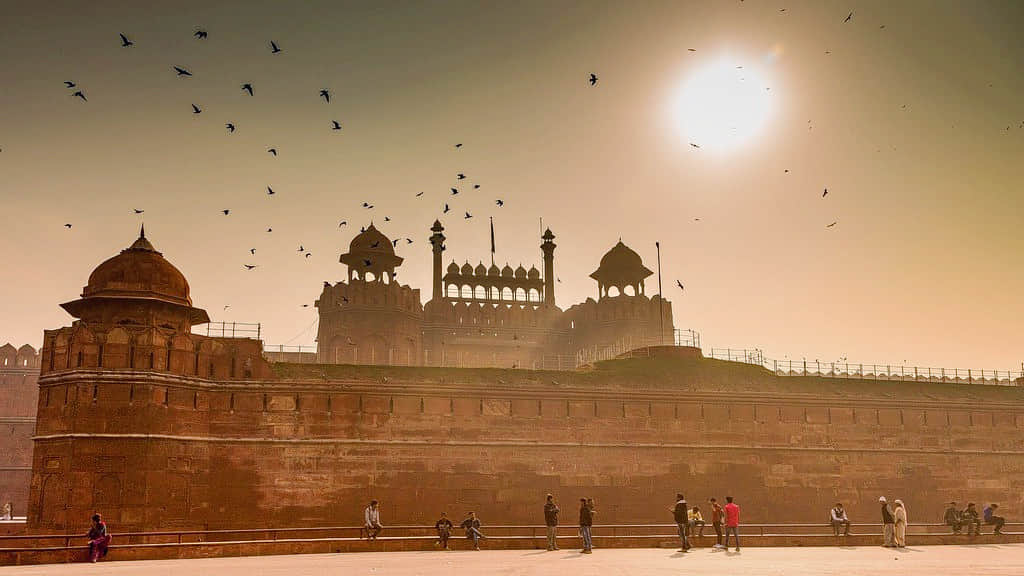
The tall minaret towers and protruding domes of this iconic red sandstone structure have made it one of the signature landmarks of Delhi. The masjid is situated in the heart of Old Delhi and at a height of more than 30 steps from the street level.
From that height of the mosque, the views of the city are panoramic and no wonder that Jama Masjid was originally named Masjid e Jahan Numa, meaning "a mosque that commands a view of the world". The prayer hall of Jama Masjid is sprawling and has 11 beautiful arches.
The mosque can seat 25000 people within its premises. Being a religious place of worship, non-Muslims are not allowed inside the mosque during prayer times and visitors are expected to respect the traditions followed.
Eid is the biggest festival celebrated here and during the entire month of Ramadan, Jama Masjid and the surroundings get drenched with an electric festive vibe. Several eateries and shops prop-up along the lanes to the mosque.
These eateries and restaurants serve delicious Mughalai cuisine day and night during the Eid time and one can go a scrumptious food tour on the lanes of Jama Masjid relishing a variety of sizzling kebabs and mouth-watering desserts.
Jama Masjid sees maximum visitor volume during the Eid eve when people from all parts of the country arrive here to seek the blessings of Almighty and to complete their Ramadan fast.
History of Jama Masjid :
Jama Masjid is the second largest mosque in the Indian subcontinent. When the Mughal emperor, Shah Jahan moved his capital to Delhi from Agra, the idea of building the Jama Masjid was seeded. The masjid was designed and planned by Ostad Khalil and was built from 1650 - 1656 under the supervision of Saadullah Khan, the Prime Minister of Shah Jahan.
The mosque was built by a crew of 5,000 workers and can accommodate more than 25,000 people. Later, it was successfully commissioned on July 23, 1656. Jama Masjid in Arabic means “Friday mosque" and was primarily built for the Muslims of the city to gather for their Friday prayers.
The original name of Jama Masjid was Masjid-i Jahānnumā which means “world-reflecting mosque” or “world-displaying mosque.” The mosque was inaugurated by Syed Abdul Ghafoor Shah Bukhrail, an Imam from Uzbekistan.
Inside Jama Masjid, holy relics like the red-beard hair of the Prophet Muhammad, his footwear and foot mark along with an Old Quran transcript on a deerskin are meticulously preserved.
A 'madrasa' near the southern end of the mosque was destroyed during the revolt of 1857. Later, the mosque was confiscated and decided to be demolished by the British government. But, due to protests and strong opposition from the public, the idea of demolition was taken back.
After independence, during 1948, the last Nizam of Hyderabad, Asaf Jah VII was asked for a donation of ₹75,000 to repair one-fourth of the mosque floor. The Nizam instead sanctioned ₹3 lakh to renovate the entire floor area. In the last two decades, the mosque has seen two terrorist attacks - one in 2003 and the other in 2010.
Architecture of Jama Masjid :
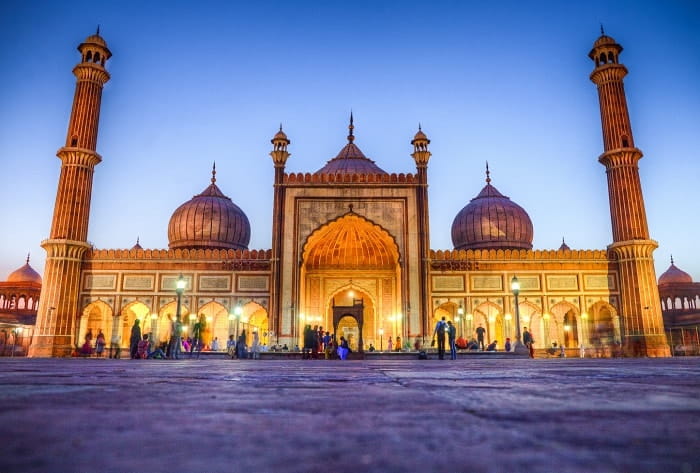
The structure of Jama Masjid is a testimony to the brilliant Mughalai architecture. Built on 1200 sq. metres of land, Jama Masjid is built using red sandstone and white marbles. The entire building of Jama Masjid along with the open courtyard in the front is built 30 steps higher than the street level.
Hence, one can enjoy panoramic views of the city around this mosque. Also, Jama Masjid is inclined to face Mecca, the holy city for Islam. The thirty feet tall archway to the mosque has the words "The Guide" on it.
Courtyard: The open courtyard in front of the Jama Masjid has an ablution tank with a fountain in the centre where one can wash their hands, face, and legs before entering the religious mosque. There is also a sandstone platform for the Muazzin to give prayer calls and sundials in the courtyard.
Minarets: There are four minarets in Jama Masjid that stand tall at about 40 meters from ground level. Each minaret has about 130 steps to reach the top. One can climb up the narrow plight of stairs to enjoy unobstructed views of the Delhi city. There is small ventilation all through the passage.
The 3 Gates of Jama Masjid: The Eastern Gate of Jama Masjid has thirty-five steps and is octagonal in shape. Towering as high as 15.4 metres, this Gate has three archways, a balcony on either sides and an opulent entrance.
The roof of the Eastern Gate looks aesthetic with honeycomb carving. This gate was primarily reserved for the entry of the Mughal emperors and later for the entry of Viceroy of India during British rule.
The northern gate of Jama Masjid has thirty-nine steps and was reserved as the entrance of the nobles. The southern gate has 33 steps with seventeen arched openings and the common men were allowed to enter only through the Southern Gate.