Jantar Mantar Delhi, <em>Delhi</em>
Delhi

Jantar Mantar Delhi, Delhi

About Jantar Mantar Delhi

The primary aim underlying the construction of this massive observatory was the preparation of astronomical charts. These were then used to track the local time zones by keeping an eye on the movement and transitions of the sun, the moon and the different planets that constitute our solar system. It thus follows that a highly precious observatory of the ancient past never fails to surprise the technology-influenced astronomers and researchers. 


The Delhi’s Jantar Mantar has a got a whopping height of around 723 feet and is comprised of different astronomical instruments totalling to a count of 13 units. Amongst these, the most precious and widely acknowledged ones are – Samrat Yantra, Misra Yantra, Ram Yantra, and Jai Prakash Yantra. The sundial, which forms the chief attraction here, is highly influenced by the ancient Egyptian Ptolemaic Structure. It strictly adheres to the sequential celestial orders of the local arrangement of the equatorial, ecliptic, and the horizontal-zenith planes. 


Thus, Delhi’s Jantar Mantar brings close the three different dimensions of belief, universe, and society. It conjoins the aspects of astronomical skills with cosmological concepts arising out of the court of a scholarly prince.

How To Reach Jantar Mantar Delhi


So, are you eager to explore this first astronomical observatory of India? Let’s begin...

Jantar Mantar of Delhi is located on Parliament Street (Janpath) and close to Connaught Place. Hence, reaching Jantar Mantar from Delhi International Airport is not a huge task. Here’s a simple travel guide for you to get transferred between Delhi International Airport and Jantar Mantar, Delhi. 

By Metro – 
You can opt for a metro transfer from Delhi International Airport to drop you to the Jantar Mantar, Delhi. As it is an international airport, you have a subway service after every 15 minutes of interval. Once you board the subway from the Delhi International Airport, you can alight at the Shivaji Stadium. Next, you need to walk for another 15 minutes until you reach your final destination – Jantar Mantar, Delhi. 

By Bus – 
You can start your bus journey from Delhi International Airport itself and get down at PS Parliament or Jantar Mantar Bus Station. From there, your final destination is at a 6 minutes walkable distance. 

By Road – 
If you do not want to opt for a public mode of transport, you can either go ahead with a direct hired taxi ride or plan for a self-drive to Jantar Mantar from Airport. The distance between the two destinations is merely 18.7 km and will consume 19 minutes of your travel time.

Best Time To Visit Jantar Mantar Delhi


Winter season (between November to March) is the best to plan your visit to the Jantar Mantar Delhi. Throughout the period, the climate remains consistently pleasant. For your ease of movement, twin your light wear clothes coupled with a pair of best sunglasses and a wide-brimmed hat.

Jantar Mantar Delhi Essential Information


- Location:
 Connaught Place, Sansad Marg, New Delhi, Delhi 110001

- Timings: 
Delhi’s Jantar Mantar opens sharp at 06:00 am in the morning and closes its doors by 06:00 pm in the evening. An average tourist usually spends around 25 minutes to 1 hour of his visit to this astronomical observatory at Delhi. 

Fee: 
The entry tickets to the Jantar Mantar of Delhi are as follows – 
         Indians – 15 INR per head 
         Foreigners – 200 INR per head 

History of Jantar Mantar


Maharaja Sawai Raja Jai Singh was a renowned scholar in the court of Emperor Muhammad Shah. He was assigned the task of confirming and rectifying currently available data about the movement and transitions of the celestial bodies. This task made Maharaja Sawai Raja Jai Singh direct his focus towards refining ancient Islamic Zij tables. By doing so, the astronomers of that era could be in a position to trace the exact hour for the said day.

In fact, his aim was designing a precise calendar for giving rise to astronomical predictions for benefiting mankind. As an undeniable part of his mission, he set out on a task to lay the foundational stone for Jantar Mantar in the year 1724. Likewise, the astronomical observatory first came to built in the heart of the capital city of India – Delhi. After that, four more observatories were raised each in Ujjain, Varanasi, Jaipur, Ujjain, and Mathura. 

Over time, the astronomical observatory structure at Delhi underwent deterioration until 1867. This called for the direct attention of the administrative measures to restructure it to its former glorious foundation. With a proper administration and maintenance, this observatory at Delhi today stands as a popular tourist attraction. 

The Architecture of Jantar Mantar


The credit to this architectural brilliance is attributed to Maharaja Sawai Jai Singh who was working on a project assigned by his Mughal Emperor – Muhammad Shah. With a view to re-assessing the current astronomical observations and charts, Maharaja Sawai Jai Singh laid the foundation for these sundials in different parts of the country. The first of all these astronomical observatories was the one constructed in Delhi. The four main instruments present within the premises of Delhi’s Jantar Mantar are as follows –

1. Misra Yantra 
This instrument was constructed to translate into a mix which is a combination of five different devices. The basic idea behind blending these five instruments to work in tandem was to assess both the shortest and longest day of the year. Besides, it was even used to track the noontime across different cities of the world. Interestingly, the instrument worked in their favour to accurately predict the noon time in major cities across the globe. 

2. Samrat Yantra – 
Samrat Yantra is alternatively known as a principal instrument. It measures 70 feet high and has a thickness of 10 feet. This resembles an equal hour sundial which has the shape of a great triangle. It is acknowledged to hypotenuse runs 128 feet in its overall length. Lying parallel along the earth’s axis, the instrument points in the direction of the North Pole. It has got indicators on either side of it where every single unit represent hours, minutes, and seconds respectively. It was uniquely constructed to predict the declining phase of the celestial bodies more accurately in comparison to other sundials of that era. 

3. Jaiprakash Yantra – 
Jaiprakash Yantra is comprised all of the hemispherical structures which are hollow in their overall appearance. They have a concave appearance. They are equidistantly marked and accompanied by attached crosswires stretched in such a way to meet their rims.

A crosswire present at the level of the rim has a metal plate with a circular opening towards the centre of the Yantra. This is the most important plate to serve as a device for recording all the night observations. It also works towards casting the identifiable shadow on the interior portion of the yantra to record solar observations. 

4. Rama Yantra – 
Rama Yantra are those instruments which were devised to accurately measure the altitudes of the planet based on their celestial position. 

Facts about Jantar Mantar Delhi


Here’s a quick look at some of the interesting trivia of Jantar Mantar at Delhi – 

1. This is a brilliant testimony representing a blend of both scientific and technical concepts of the most enormous observatories of the medieval era. 

2. Even before the construction of this observatory, the sundials still were held in practice. However, the structure of the Samrat Yantra re-defined the use of sundial into a more accurate instrument so that it could be used in the determination of various astronomical factors about the celestial bodies. It also proved to be a boon in predicting the declining angle of heavenly planets within our solar system. 

3. It was during the Asian Games scheduled in the year 1982, that a logo of the Delhi’s Jantar Mantar was brought into use. 

4. The placing and location of the instruments within this observatory was done in such a way that observers could be assisted in predicting the celestial movements with bare eyes. 

5. It is believed that there were five such astronomical observatories built in totality between 1717 to 1738 CE. 

6. The sundial, one of the chief attractions at the Jantar Mantar, helps in measuring the exact time of the day. It can accurately predict the time at the exactness of one a fraction of one second. 

7. One of the structures here have a plaque affixed on to it. This plaque dates back to the construction year of this observatory as 1710. It was somewhere later that the research findings revealed the exact construction year 1724. 

8. The sculpture structures located within the premises of Jantar Mantar have actually been influenced by myriads of contemporary art pieces that exist across India. 

9. The Jantar Mantar observatory at Delhi continued to produce astronomical data for seven years down the line. These data were then collated, calculated and placed in front of the Mughal Emperor. As soon as the structure was encircled with tall buildings, it stopped its process of accurate astronomical data production. 

10. The literal meaning of Jantar Mantar is – Jantra or Yantra signifies an instrument whereas Mantra signifies calculation. Thus, when the two different phrases were 
brought together, it is pronounced as a calculating instrument. 

Tips for Visiting Jantar Mantar


Here are a few tips for you to have an unparalleled experience with Jantar Mantar, Delhi – 

1. Most of the instruments situated within Jantar Mantar, Delhi are based on sunlight. Hence, to have a track of their functionality, you need to plan your visit to this magnificent observatory in the daylight. 

2. If you are eager to understand the mechanism underlying the working and functioning of this observatory, we highly recommend you to hire a tourist guide. 

3. Make sure that you always keep a bottle of water with you so that you remain hydrated. 

4. In case you are targeting summers for your Jantar Mantar, Delhi visit, either plan it early in the morning or late in the evening. This will shield you from the sweltering heat of the capital city. 

Thrillophilia

Why Choose Thrillophilia?

3 Million+

Happy customers from 70+ countries all around.

4.8/5

Rated across Trip Advisor and Google reviews.

Curated With Love

Special curated Indian itineraries built for Indians.

24/7 Assistance

Always there to help before and during trips.

Jantar Mantar Delhi FAQs

Jantar Mantar Delhi Reviews

4

From 4 verified visits

5
1
4
2
3
1
2
0
1
0
Anwesha Pilla24 May 2016
5.0
Booked: Historical Sightseeing Tour of Delhi

beautiful city and there is so much history here that you could get lost and find yourself in the midst of something so beautiful. the place is amazing and simply teeming with culture.

Gandharv Jain4 Aug 2015
4.0
Booked: Historical Sightseeing Tour of Delhi

It is a perfect and amazing experience. I took my kids as I wanted them to know the city and its beauty for themselves. The entire experience was without a doubt exclusive and very well organised and planned.

Subhash Butt6 Sept 2015
4.0
Booked: Historical Sightseeing Tour of Delhi

Had fun exploring the amazing and well kept city of Delhi. Although I am an Indian by birth, I have lived abroad most of my life. Coming here and exploring the city all over again was a boon!

Drona Nayar3 Jul 2015
3.0
Booked: Historical Sightseeing Tour of Delhi

Nothing new to see.Same old things that I had already seen. Bored.

Popular Related Attractions

Red Fortfrom ₹99

Red Fort

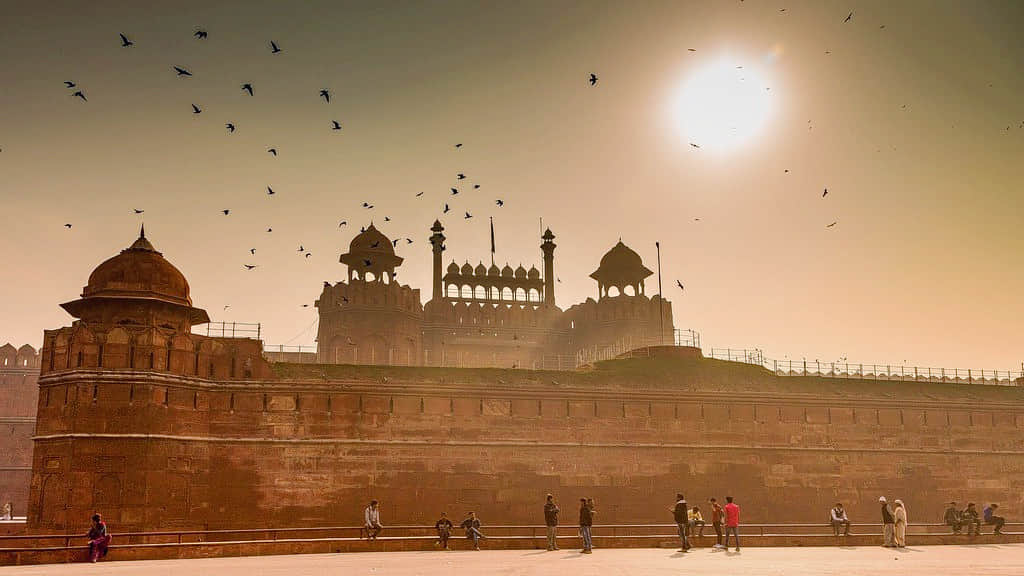
The colossal Red Fort in Delhi was the home of the formidable Mughal emperors for around 200 years until the British took over it in 1857. The fort is not just a symbol of the popular grandeur of the Mughal era, but it has withstand the trials of turbulent times, especially during India’s most historical events that shaped the foundation of the country. This is one of the most famous tourist attractions of the national capital. The UNESCO declared the Red Fort a World Heritage Site in 2007, in recognition of its significance. Red Fort is one of the most celebrated monuments of India and is the symbol of valour and peace.This 17th century monument is of octagonal shape and it covers around 255 acres of land. The total number of gates here is three. The royals used to enter the fort through the Khizrabad Gate that has been closed for commoners now. The Lahore and Delhi Gates are open to locals and tourists. The fort was planned to house a palace inside its campus. The Red Fort still a historical and architectural wonder.Location: The Red Fort is based on a 255-acre of land near the western bank of the Yamuna. The Chandni Chowk of Old Delhi ends at the vicinity of Red Fort. The business district of Connaught Place is located a few miles north of the fort.Price: The entry ticket price of Red Fort is Rd 35 for native Indian citizens. For foreigners, the tickets are priced at Rs 500. If you opt for the light and sound show at the Red Fort, it will cost you Rs 60 per adult person, while for children, it is Rs 20 per head. During the weekend, the ticket prices vary a bit. For adults it is Rs 80 and Rs 30 for kids.Timing: The Red Fort remains open every day from 9.30am to 4.30pm.

More Things to Do in Delhi

Quick links to everything else worth a slot on a longer stay.