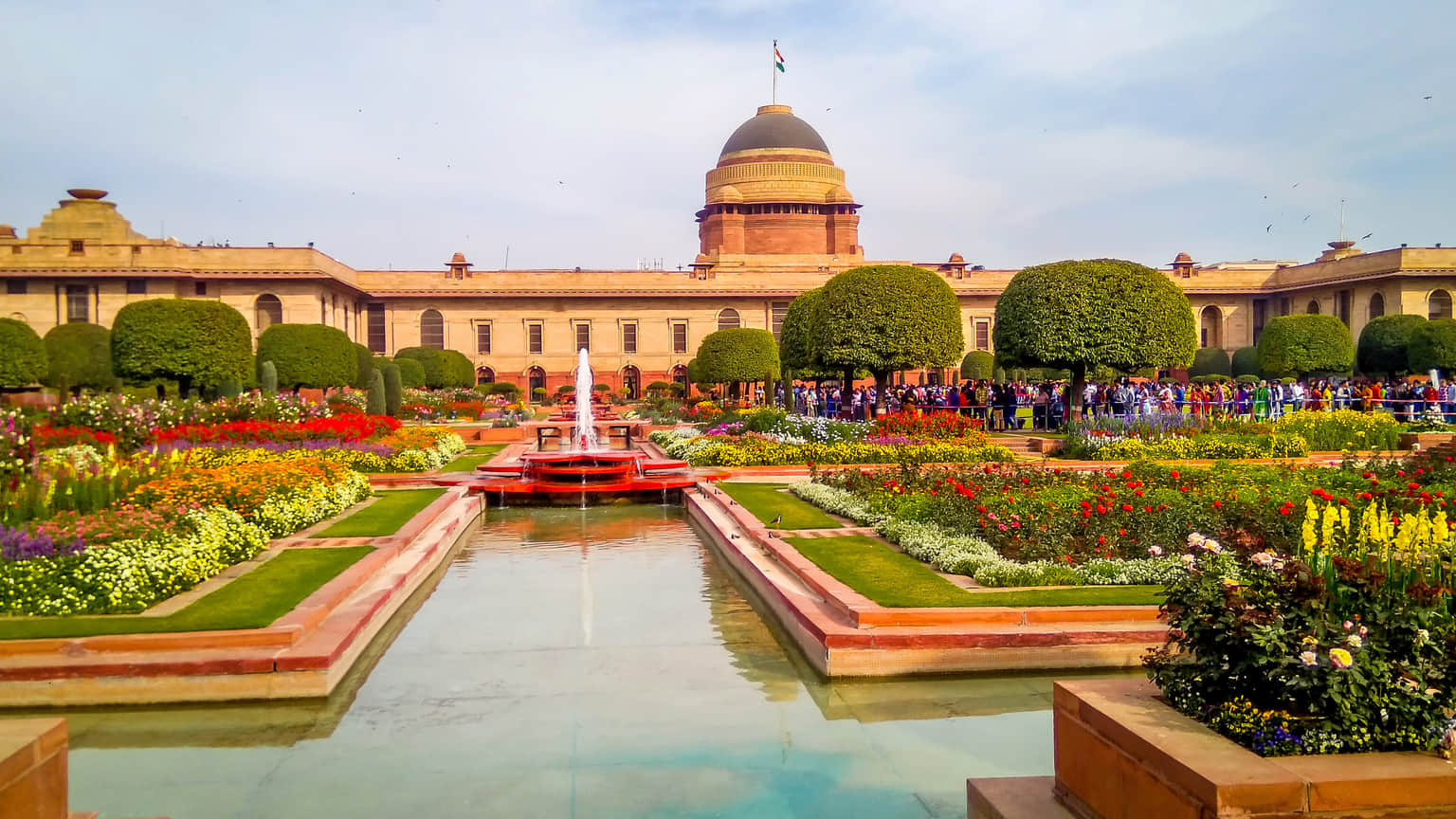
A stunning piece of lush green wonder ensconced in India's presidential house, the Mughal Gardens of Delhi are a sight to behold for tourist who visits the Indian capital. Mughal gardens attract several tourists from around the world and are known for their lush green plantations, attractive wildflowers and perfectly manicured grass.
Also often called the soul of the Presidential palace, the Mughal gardens of Delhi are located in Rashtrapati Bhavan, which is the residence of the President of India. As a visitor to the Rashtrapati Bhavan, you will catch sight of the glorious Gardens as you walk around.
The entire make of the Gardens is said to have been inspired by the Mughal Garden of Kashmir and Agra. There are also indications of the architecture being inspired from choicest Persian Paintings.
Sir Edwin Lutyens, credited with the designing of most of the Indian capital, was the chief architect supervising the project of the Mughal Gardens. He designed the positioning of the plantations of the Mughal Gardens in 1917.
However, it took a little while after that to finalize the estate. By 1929, all plantings in the garden were done perfectly. The then director of Horticulture, William Mustoe, was another collaborator of Sir Lutyens in designing the Mughal gardens. Sir Mustoe is known to have brought together two different cultures and practices of Horticulture to the garden, making it one of the most complexes yet charming human-made gardens of our time.
Attractions of Mughal Gardens:
1. Spring Flowers - The primary attractions of Mughal gardens are its blossoming flowers, trees and exotic plants scattered all around. Tourists and locals alike enjoy the sights of the blooming flowers in Spring, when the entire garden is decorated in colours and appears lively.
2. English Look - One of the best attractions of the gardens includes the European flowerbeds, lawns and private hedges. These features make the Garden look a bit English as they are a trademark of typical English gardens that graced the streets of England in the Victorian and Elizabethan eras.
3. Intricate Design - The Mughal canals and terraces are another primary feature of this place, bringing in a taste of Mughal style to the expansive greens. The terraces are carved intricately in Mughal motives and Persian inscriptions preaching the philosophy of life and man’s harmony with nature. The canals are trademarks of the gardens located at Agra, such as the Mehtab Bagh.
4. Roses - As many as 159 decorative variety of roses bloom in the Mughal gardens every spring. This makes the Mughal Gardens of Delhi a truly remarkable collection of some of the world's most beautiful rose plantations. Some unique rose varieties at the Delhi Mughal gardens include Adora, taj Mahal, Mrinalini, Scentimental, Oklahoma or black rose, Belami, Black Lady, Paradise, Blue Moon and Lady X.
You should also have a look at some roses which have been named after famous people like Mother Teresa, Raja Ram Mohan Roy, Mr Lincoln, John F. Kennedy, Jawahar, Queen Elizabeth, Christian Dior. Other brilliant roses have been named after characters from the great Hindu epic Mahabharata – Arjun and Bhim.
5. Exotic Plants - Roses are not the only chief attraction here at the Mughal Garden. Botany enthusiast finds pure delight in looking at plant varieties like Asiatic lilies, hyacinth, Daffodils, tulips, and various seasonal flowers. The seasonal flowers with bulbous stems are some of the most beautiful sights here. Flowers like alyssum, daisy and pansy are used to do the edging of the flowerbeds.
Highlights of the Mughal Garden:
The Mughal Gardens real highlights are, without a doubt, its immensely diverse variety of plants and trees. There is no other comparable garden in India and perhaps the world, that hosts such unusual plant varieties with such delicacy in a government building.
1. Plant Varieties - 60 to 101 types of bougainvillaeas are grown in the gardens which span over a vast 15 acres. Even the grass that shadows all the plant species present at the Mughal gardens are a particular type of doob grass that is grown extensively in Calcutta and its surrounding regions. Documents point toward the fact that the grass planted in these gardens was initially being brought from Calcutta itself.
2. Unique Trees - There are over 50 different shrubs, vines and trees spread all over the impressive Mughal Gardens of Delhi. Some of the most attractive and exotic trees located in the place include Moulsiri tree, flower-bearing torch tree, and Golden rain tree.
3. Bird's Eye View - The real beauty of the gardens is apparent only from the first story of the Rashtrapati Bhavan, where tourists can witness the three-storied style of the garden in depth. The first is a rectangular garden, followed by a long and circular structure. Each of these structures has a unique collection of plants, trees and herbs that visitors can enjoy a view of.