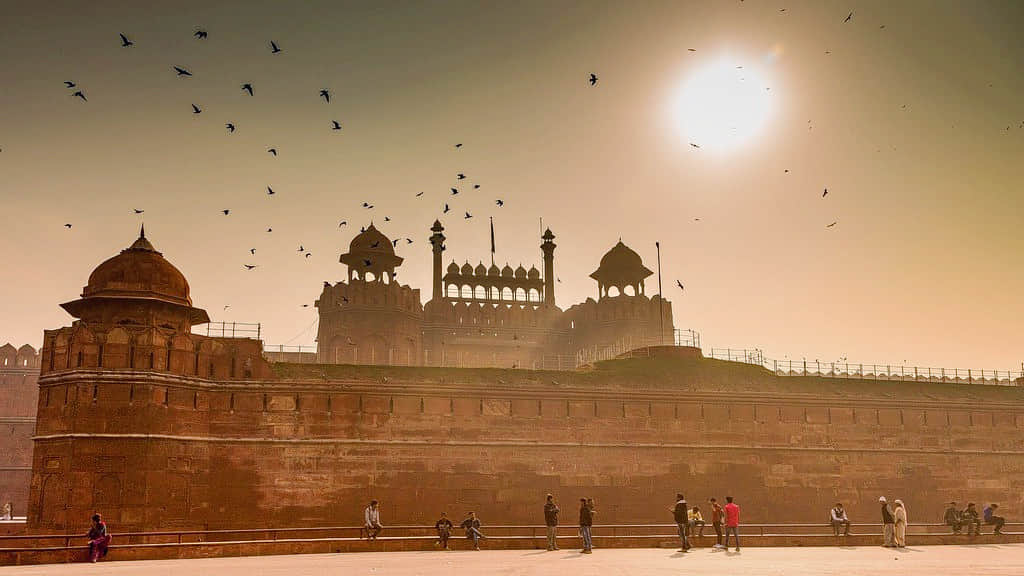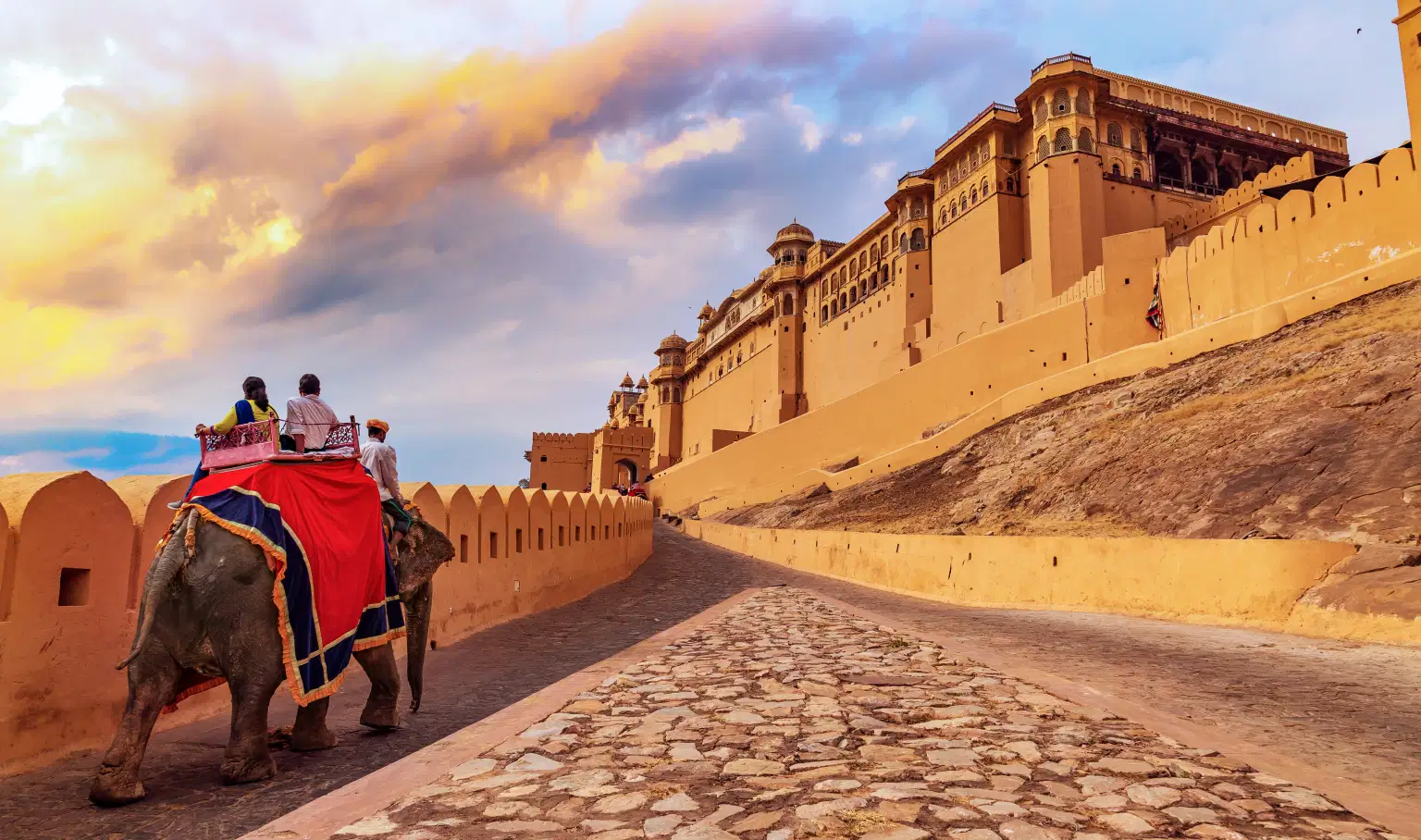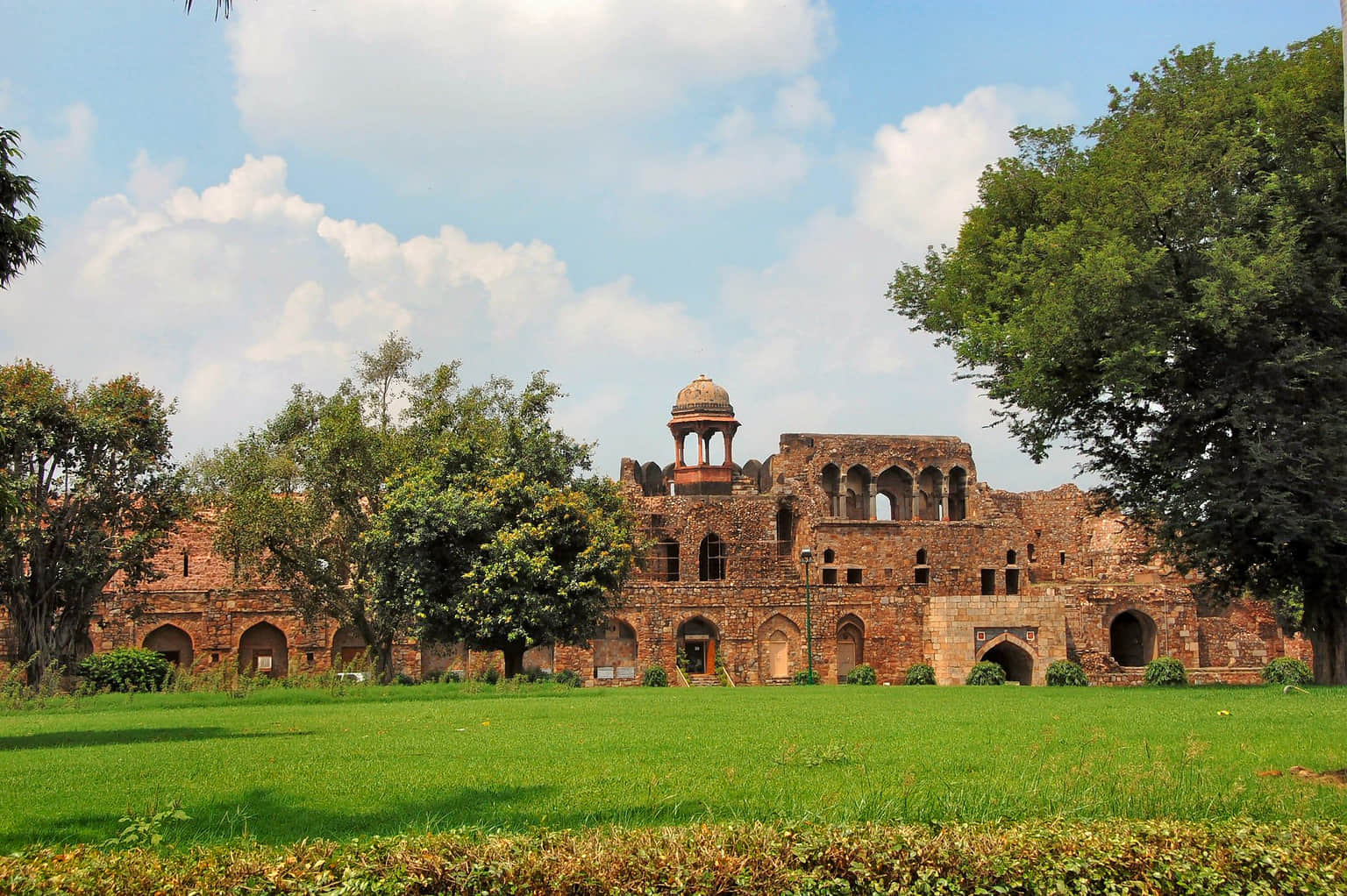
Purana Qila is Urdu for Old Fort and is situated in New Delhi. It is often referred to as Shergarh or Sher Fort after the Mughal Emperor Sher Shah Suri, who began its construction.
Purana Qila is said to be inhabited for the past 2,500 years, and excavations at the site show evidence for materials belonging to the pre-Mauryan era.
The present citadel started its construction in the reign of Humayun and was completed by Sher Shah Suri. The fort is said to be built at the site of Indraprastha, which according to the Mahabharata, was the capital of the kingdom of the Pandavas.
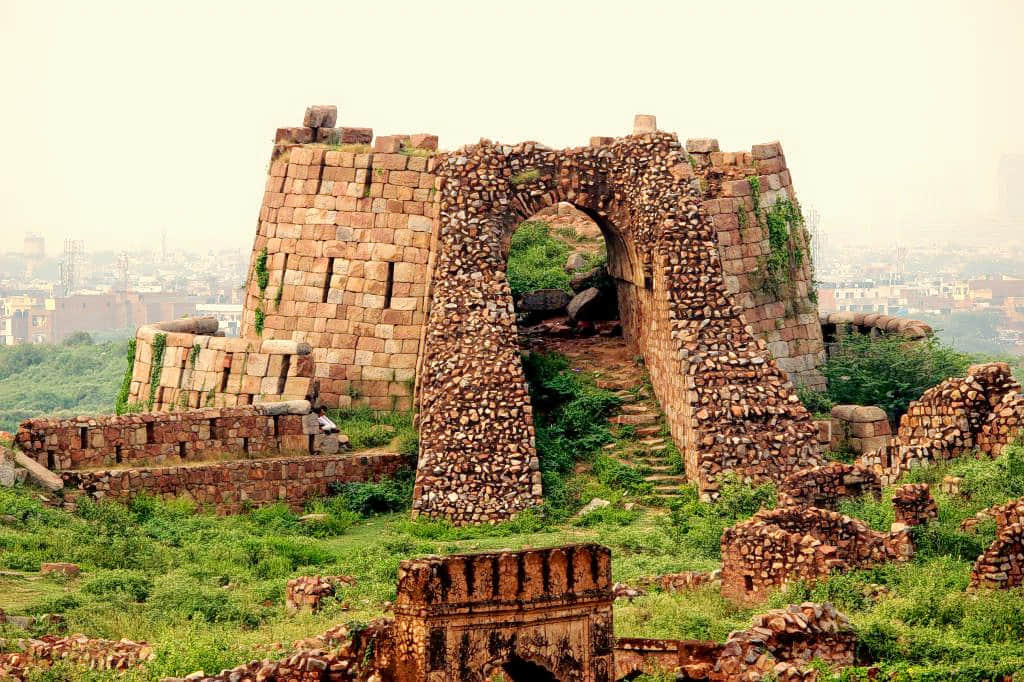
This 1.5 km long site of construction is known to have three gateways – Bara Darwaza or the Big Gate facing west, the Humayun Gate facing south, and the Talaqqi Gate, which is often referred to as the forbidden gate.
All of the gates are double-storeyed and comprise of huge semi-circular bastions flanking either of their sides.
Both, the gates and bastions are decorated with white and blue-tiled marbles, only adding on to the aesthetic appeal of the fort. The reminiscent features of Rajasthani architecture dazzle along with the Islamic architecture from the Mughal era, thus making Purana Qila a heritage site.
History of Purana Qila:
According to the mythological belief, Purana Qila was built at the site of Indraprastha from Mahabharata, which dates back to the 3rd century BCE. Later on, Humanyun and Sher Shah Suri renovated the site to the Qila.
It is said that the massive walls and gates were constructed under Humayun’s guidance, while the building within the walls, including the mosque, was built by Sher Shah Suri.
In simple terms, the Indraprastha was rebuilt by Humayun under his reign and was called Dinpanah, while the citadel was improved by Sher Shah Suri. The two most prominent attractions of the Qila are Sher Mandal and Qila-i-Kunha Masjid.
Sher Mandal was built as a cenotaph in order to honor Humayun’s death. On the other hand, the Qila-i-Kuhna was constructed in 1541 AD.
The Indo-Islamic architecture decorating the interior and exterior walls of it only speaks of its cultural significance. In fact, it is described as the epitome of Indo-Islamic architecture by Fergusson.
The Qila was inspired by Jama Masjid, which was established 15 years before the reconstruction of Qila. Sher Shah Suri only vivified the construction with avant-garde composition and structure.
The Architecture of Purana Qila:

Purana Qila is rectangular in shape and spreads across a sprawling campus of 1.5 km. The eastern and western walls of the Qila are the tallest, which were specifically designed for safeguarding the Kings residing within the four-walls. All the walls surrounding the Qila are 0.33 meters thick and supported by bastions.
These bastions are equal in frequency, except for in the westward wall, where they are built at a distance of 73 meters from each other.
According to historicists, this was done to protect the Qila from being submerged in water as the Qila was surrounded by ounces of water on all four sides.
The bastioned parapets are built of rubber masonry. The three gates flanking the Qila speak of the frivolous Indo-Islamic relations and the Muslim and Hindu architectural styles.
The north most gate of the Qila is known as the Tallaqi Darwaza.
It is engraved with panels and paintings showcasing mortal combat between a human and a lion. The notable and dazzling buildings of Sher Mandal and Qil-i-Kunha lie within the four walls of the Qila and attracts many tourists due to their intricate carvings.